

Create. Build. Explore.
IDEAS INTO REALITY. ONE PROJECT AT A TIME.




“Man cannot discover new trails
unless he dares to lose sight of the forest.”

What I Do
I build things. Sometimes that means writing software or designing electronics. Other times it’s machining a part, firing up a laser or 3D printer, building something for the railroad, or figuring out how to solve a problem nobody has handed me instructions for. The medium changes. The process really doesn’t. Understand the problem first, then figure out the best way to solve it.

MY PURSUIT
I’m always learning something new. Electronics leads to software. Software leads to fabrication. Fabrication leads to photography, model railroading, or another project I didn’t know I was going to start. I don’t learn because I need to know everything. I learn because curiosity keeps opening doors, and I still want to know what’s on the other side.

WHY I SHARE
Figuring something out is useful. Sharing what I learned makes it more useful. I document the projects, explain what worked and what didn’t, and share enough of the process that someone else can take the idea, build on it, and make it their own. Knowledge shouldn’t stop with the person who discovered it.
What I Do
I build things. Sometimes that means writing software or designing electronics. Other times it’s machining a part, firing up a laser or 3D printer, building something for the railroad, or figuring out how to solve a problem nobody has handed me instructions for. The medium changes. The process really doesn’t. Understand the problem first, then figure out the best way to solve it.
MY PURSUIT
I’m always learning something new. Electronics leads to software. Software leads to fabrication. Fabrication leads to photography, model railroading, or another project I didn’t know I was going to start. I don’t learn because I need to know everything. I learn because curiosity keeps opening doors, and I still want to know what’s on the other side.
WHY I SHARE
Figuring something out is useful. Sharing what I learned makes it more useful. I document the projects, explain what worked and what didn’t, and share enough of the process that someone else can take the idea, build on it, and make it their own. Knowledge shouldn’t stop with the person who discovered it.
Areas of Focus

Electronics
Microcontrollers, sensors, circuits, embedded systems, automation, and the occasional idea that probably involves more wires than originally planned.

Off-Grid Power
Solar, batteries, power management, and practical off grid systems built around what something actually needs to do.

Laser & CNC
Cutting, engraving, machining, and turning CAD drawings into real parts, prototypes, signs, fixtures, and whatever else the project needs.

3D Printing
Functional parts, prototypes, models, fixtures, and the wonderfully dangerous ability to manufacture the thing I just decided I need.
BEHIND WODOW CREEK
I’m Chris, Widow Creek is where a lot of otherwise unrelated interests come together. Engineering, electronics, photography, fabrication, model railroading, the outdoors, and a lifelong habit of asking, “How does that work? I build things because I’m curious. I share them because somebody else might be curious too.

BEHIND WODOW CREEK
I’m Chris, Widow Creek is where a lot of otherwise unrelated interests come together. Engineering, electronics, photography, fabrication, model railroading, the outdoors, and a lifelong habit of asking, “How does that work? I build things because I’m curious. I share them because somebody else might be curious too.
MORE ABOUT ME
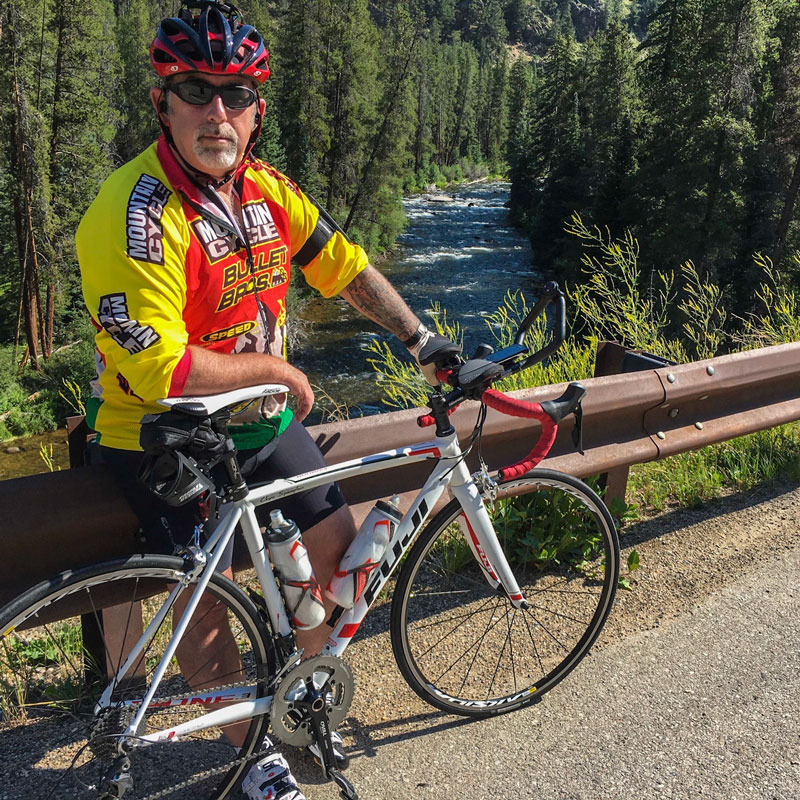 I’ve spent most of my life somewhere between technology and the outdoors, and I’ve never been particularly good at staying inside one lane.
I’m a software engineer, electronics tinkerer, photographer, fabricator, model railroader, and lifelong maker. Give me a camera, a microcontroller, a CAD drawing, a pile of components, or a problem that doesn’t have an obvious answer and I’ll probably disappear down the rabbit hole for a while.
But the tools aren’t really what drives me. Curiosity does.
I want to understand how things work. More importantly, I want to understand why they work. I’ve learned that jumping straight to a solution usually means solving whatever problem happens to be visible instead of discovering the problem underneath it. So I ask questions, experiment, break things occasionally, change direction when the evidence says I should, and keep digging until the answer makes sense.
That same curiosity gets me away from the workbench. Hiking, cycling, kayaking, camping, photography, and exploring new places are another side of the same thing. There is always another trail to follow, another place to see, and something I haven’t learned yet.
And when I do learn something, I tend to share it.
I don’t believe knowledge becomes more valuable by keeping it to myself. A project becomes more interesting when somebody takes what I learned, changes it, improves it, and builds something I never would have thought of. That’s why I document projects, write about the failures along with the successes, and try to explain the reasoning rather than simply hand somebody an answer.
Widow Creek is where all of those pieces come together.
It isn’t really a business, a hobby, or a portfolio. It’s my workshop. It’s where engineering, making, photography, model railroading, the outdoors, and whatever I’m curious about next are allowed to coexist without needing to fit neatly into a category.
I’m still learning.
I’m still building.
And I’m still looking for the next trail.

3D Printing
3D printing changed the way I approach small problems because I’m no longer limited to finding a part that already exists. I design and print functional components, prototypes, replacement parts, fixtures, models, and one off solutions in both filament and resin. Sometimes the print is the finished product. Sometimes it’s simply the fastest way to test an idea before making the real thing.
Being able to go from “I need this” to holding it in my hand is still pretty remarkable.

Laser CNC
Sometimes the solution needs to exist in the physical world. Laser and CNC tools let me move from a drawing on the computer to a finished part with a level of precision that’s difficult to achieve by hand. I use them for fabrication, engraving, fixtures, panels, prototypes, model building, signs, and plenty of projects that don’t fit neatly into a category.
The machine is only the tool. Most of the work still happens while figuring out what needs to be made and how to make it well.

Off-Grid Power
My interest in solar started with a practical question: how do you make reliable power available where the grid isn’t? I design and build small off grid systems for RVs, vans, boats, cabins, containers, workshops, and other independent applications. That means looking at the entire system: actual energy use, available solar, batteries, charging, inverters, wiring, protection, and how all of those pieces work together.
The goal isn’t to install the most equipment. It’s to understand the need and build a system that makes sense.
Electronics
Electronics is usually where an idea stops being something on a screen and starts interacting with the real world. I work with Arduino, ESP32 and other microcontrollers, along with sensors, displays, motors, audio, lighting, controls, and whatever hardware a project requires. Some projects solve practical problems. Others automate a model railroad, make something interactive, or simply answer the question, “Can I make this work?”
For me, electronics isn’t about using a particular platform. It’s about understanding the problem and choosing the components that make sense for it.
